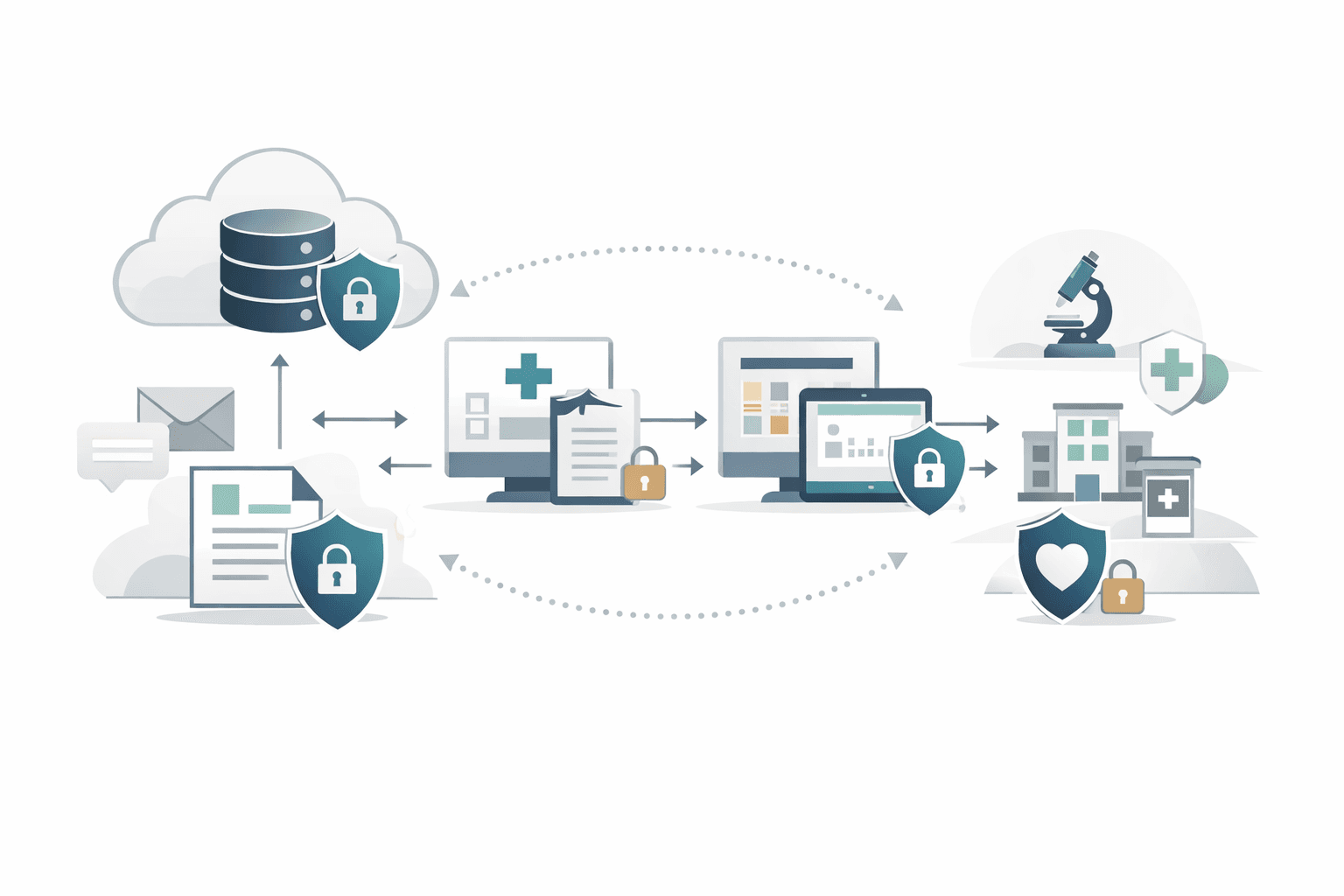




Top HIPAA-Compliant Workflow Software Solutions for Healthcare Teams
Healthcare organizations increasingly rely on digital workflows to manage patient intake, communications, referrals, and document exchange. When these workflows involve protected health information (PHI), software choices must support HIPAA requirements while still enabling efficiency and automation.
HIPAA-compliant workflow software helps healthcare teams reduce manual work, improve accuracy, and securely move information between systems. Below are six workflow and communication solutions commonly used in healthcare environments where HIPAA compliance is required.
What Makes Workflow Software HIPAA-Compliant?
HIPAA compliance is not a single feature or certification. It depends on how software is designed, configured, and used within an organization. In general, HIPAA-compliant workflow solutions support:
Encryption of data in transit and at rest
Role-based access controls and audit logging
Secure handling of PHI across integrated systems
Availability of a Business Associate Agreement (BAA)
Policies for data retention, access, and breach response
Not every workflow tool stores PHI directly, but any system that transmits, processes, or facilitates access to PHI must be designed with HIPAA safeguards in mind.
1. FaxSIPit – Secure Fax & Document Workflow Integration
Despite ongoing digitization, fax remains a core communication channel in many healthcare workflows, particularly for referrals, records, and external coordination. FaxSIPit provides HIPAA-compliant fax and document workflows that integrate into modern cloud environments.
Best for:
Healthcare teams that rely on fax within automated or hybrid workflows
Why it fits HIPAA-regulated environments:
FaxSIPit enables secure, auditable fax communication while reducing manual handling of PHI through APIs and system integrations.
2. Emitrr – End-to-End HIPAA-Compliant Workflow & Communication Platform
Healthcare workflows extend far beyond just faxing—they include patient communication, intake, scheduling, follow-ups, documentation, and care coordination. Emitrr delivers a comprehensive HIPAA-compliant platform that brings calling, texting, digital medical forms, faxing, and automation together in one unified system, helping healthcare teams eliminate fragmented tools and manual processes.
Best for:
Healthcare teams looking for an all-in-one HIPAA-compliant workflow solution that streamlines patient communication, documentation, and operational efficiency.
Why it fits HIPAA-regulated environments:
Emitrr enables secure, auditable communication across SMS, voice, digital forms, and fax while minimizing manual handling of PHI through automation, centralized workflows, and seamless integrations with EHR and practice management systems.
3. Weave – Unified Communication & Practice Workflows
Weave provides communication and workflow tools used by healthcare practices to manage messaging, reminders, and internal coordination. Its platform helps consolidate patient interactions and operational workflows into a single system.
Best for:
Practices looking to centralize communications and workflow touchpoints
Why it fits HIPAA-regulated environments:
Weave supports secure communication workflows that can be configured for healthcare use cases involving PHI.
🔗 https://www.weavecs.ai/resources/
4. Keragon – Healthcare Workflow Automation & Integrations
Keragon is a no-code workflow automation platform built specifically for healthcare. It enables teams to automate processes across EHRs, scheduling systems, CRMs, and internal tools without custom development.
Best for:
Automating cross-system healthcare workflows
Why it fits HIPAA-regulated environments:
Keragon is designed for healthcare automation and supports compliance-focused integrations across clinical and operational systems.
5. Redox – Secure Healthcare Data Integration
Redox provides the integration infrastructure that allows healthcare applications to exchange data with EHR and clinical systems through standardized APIs. While not a workflow tool on its own, Redox often underpins HIPAA-compliant automation.
Best for:
Organizations connecting multiple healthcare systems and vendors
Why it fits HIPAA-regulated environments:
Secure, auditable data exchange is a prerequisite for compliant workflows, and Redox provides that foundation.
6. Jotform (HIPAA Edition) – Secure Intake & Form Workflows
Jotform’s HIPAA-enabled plans allow healthcare organizations to create secure forms for patient intake, consent, and data collection. These forms often act as entry points for broader automated workflows.
Best for:
Patient intake, surveys, and structured data capture
Why it fits HIPAA-regulated environments:
When configured with HIPAA features enabled, Jotform supports secure collection and handling of PHI.
🔗 https://www.jotform.com/hipaa/
How to Choose the Right HIPAA-Compliant Workflow Tools
Most healthcare organizations use multiple tools working together, rather than a single platform. When evaluating workflow software, consider:
Where PHI is created, transmitted, or stored
Integration requirements with EHRs or internal systems
Whether a BAA is available
Access controls and auditability
Scalability as workflows grow
Understanding each tool’s role within the broader workflow is key to maintaining both efficiency and compliance.
Frequently Asked Questions
Is workflow automation allowed under HIPAA?
Yes. HIPAA permits automation as long as appropriate administrative, physical, and technical safeguards are in place.
Do HIPAA-compliant tools require a BAA?
If a vendor handles PHI on your behalf, a Business Associate Agreement is typically required.
Can fax still be part of a HIPAA-compliant workflow?
Yes. Fax can remain compliant when implemented using secure, controlled, and auditable systems.
Final Thoughts
HIPAA-compliant workflow software enables healthcare teams to streamline operations while protecting patient data. Whether automating communications, intake, integrations, or document exchange, the right combination of tools can reduce manual effort without increasing compliance risk.
As healthcare workflows continue to evolve, flexibility and interoperability will remain just as important as security.